

My mini adventure turned out to be more of an adventure than I’d planned.
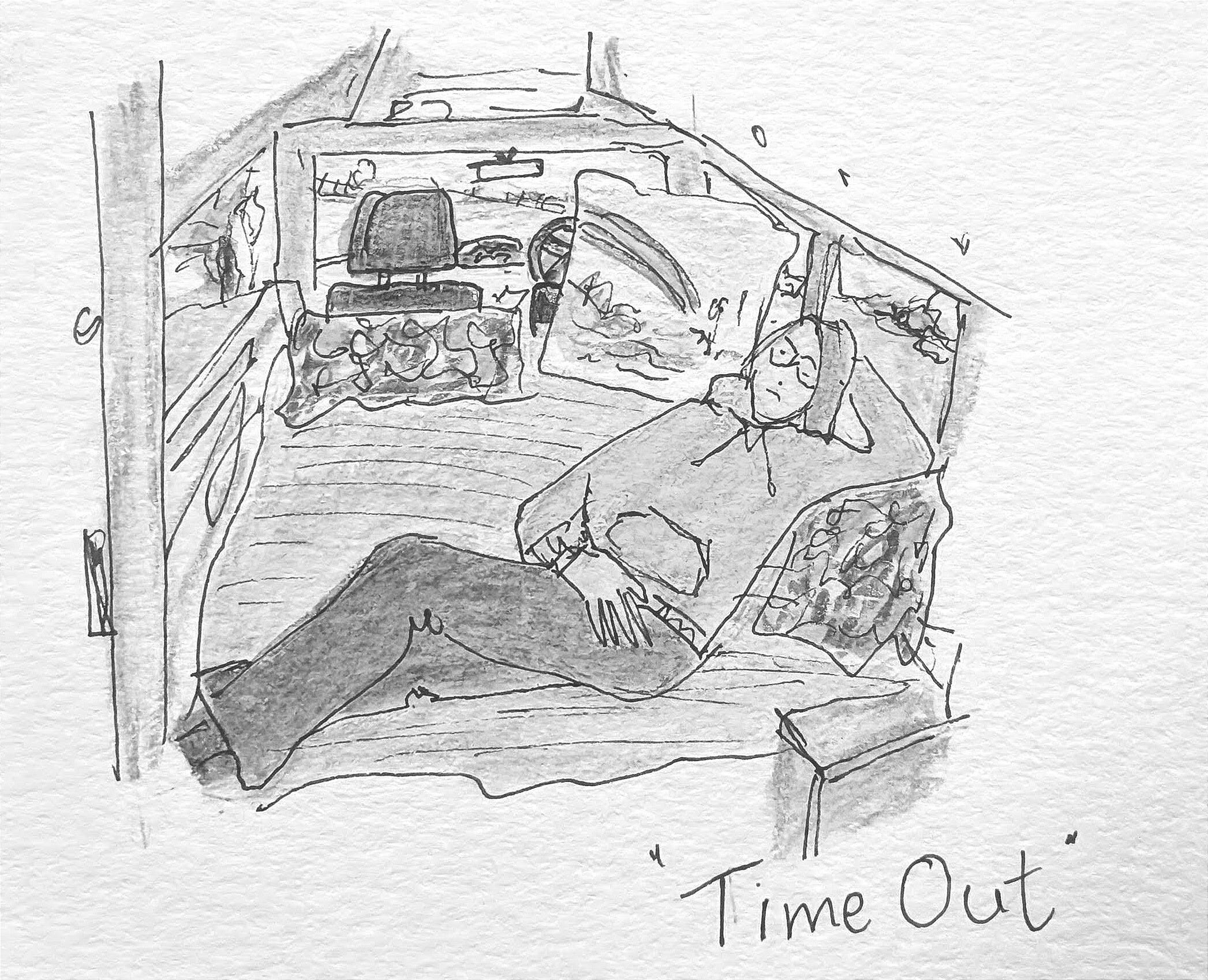
At minus three degrees, the coldest it’s been around here for a long while, I was only three miles from home, camping out alone in our tiny camper van. A few days earlier, I’d named some values with my counsellor: courage, honesty, kindness, including self-kindness, and adventure.
This felt like pressing “go” on all four.
I’d reached that familiar point where everything felt just a bit too much. Not dramatic, just full. So I did the honest thing and said out loud that I needed some space. That, for me, was both honest and courageous. Then I followed it up with kindness, not just kind thoughts, but kind action.
I booked a campsite close to home and set off in TC, our little camper van that we’ve loved and converted, but haven’t used nearly as much as we’d hoped.
It was properly cold.
I slept in a hoodie, thick socks and gloves, under layers of blankets and a duvet. Early in the morning, I woke to complete stillness and windows laced with frost. For a brief moment, a slightly dramatic one, I wondered if I might actually be frozen in.
I tested the door.
There was a tiny pause where my brain considered headlines along the lines of:
Local woman found cheerfully iced into a camper van three miles from her own house.
Then, with a big yank, the door opened.
And I smiled.
It was fine. More than fine. I loved it. It felt like an adventure, the safe kind. The kind you choose.
The evening had been spent cosily in the van, listening to music and podcasts and breathing slowly. No one needing anything. Just space.
The campsite was so close to home, yet it felt like a different world. As you entered, there was a small shed selling eggs, fresh fruit and vegetables, simple, grounded and quietly lovely. It felt like a breath of fresh air as soon as I arrived. The owner was warm and genuinely kind, and I left thinking this little spot might become a future retreat place for me, somewhere I can go when I need a night away from my responsibilities, without having to travel far.
In the morning, I headed to a lakeside café and treated myself to breakfast and coffee, and then another coffee, plus a scone with jam and cream. It turns out courage burns calories.
There was plenty to be grateful for.
And it was there, sitting by the window with my journal, that I tried something new.
Gratitude, but with a response
I’ve practised gratitude before. Many times. Sometimes it’s helped; sometimes it’s felt a bit thin, a little like trying, unsuccessfully, to talk myself into feeling better.
Recently, I’ve been reading Joyful Journey by James Wilder, and one of the first practices he describes is interactive gratitude.
You write down what you’re grateful for. Then you pause. You reflect on how God might be responding to your gratitude, and you write that down too.
That may sound unusual. For me, it felt quietly familiar, as I often try to listen as I pray.
As I wrote, not just my thanks, but what felt like God’s gentle response, something in me settled. It wasn’t dramatic. No emotional surge. Just a quiet softening.
My shoulders dropped.
My breath slowed.
It felt relational.
Why being met matters
Neuroscience offers some helpful clues here. Anxiety and worry tend to run along different neural pathways from gratitude and love. When we focus on connection and appreciation, we engage the prefrontal cortex, and the threat signals of our fight-or-flight system begin to quieten.
But what seems to matter most is not simply doing gratitude.
It is being met in it.
Psychologist Barbara Fredrickson describes love as “positivity resonance”, the small moments of shared positive emotion that occur in a relationship. Research increasingly suggests that our nervous systems settle most effectively not by managing ourselves better, but through relational safety.
Calm comes when we are received.
For me, that receiving happened through Immanuel journaling, gratitude offered to God, and a sense of it being gently answered. For you, it may come through a trusted friend, a therapist, or someone who listens without trying to fix.
Either way, something shifts when gratitude isn’t left echoing in our own heads.
When gratitude answers back
The night away mattered.
The self-kindness mattered.
The scone absolutely mattered.
But what settled me most was not the solitude; it was the sense of being accompanied within it.
Maybe gratitude doesn’t calm us because we’re doing it “right”.
Maybe it calms us because we’re no longer alone in it.
Gratitude settles me most when it becomes a conversation, not a monologue.
Beautiful, Andrea.😊