

Lately, I’ve been sitting with the idea that before kindness can feel real, there may first need to be truth.
It came up in conversation with a small WhatsApp support group I’m part of.
We were talking about shame. What it feels like to carry it. How it shapes us. And how we escape it… or try to.
Someone mentioned self-compassion, which seems to come up in conversations a lot recently.
Friends were talking about the need for kindness towards ourselves. Treating ourselves like we would a good friend.
And I found myself quietly thinking:
yes…
but also not quite.
Not because I disagree.
I think self-compassion matters deeply.
But if I’m honest, in the past, when I’ve tried some self-compassion practices, they’ve often felt awkward or performative to me.
Like I was going through the motions of saying kind things to myself without really believing them.
As though I was trying to apply comfort—a plaster—to a wound that hadn’t been cleaned up or properly tended to yet.
I knew the ideas behind self-compassion were good ideas.
But something wasn’t quite landing.
Recently, I read Forgiveness: Reclaiming Its Power in a Culture of Outrage and Fear by Amy Orr-Ewing.
And it gave me language for something I hadn’t been able to name, but had been circling for a while.
She writes about forgiveness requiring an honest appraisal of harm.
A way of looking clearly at what has happened without minimising it or downplaying it.
She uses the phrase bearing witness.
That phrase stopped me in my tracks.
Bearing witness.
Seeing clearly.
Naming truthfully.
Not rushing past pain too quickly.
Not tidying it up.
Not skipping to redemption before grief has had room to speak.
She writes that rushing to forgiveness can sometimes short-circuit anger or grief.
And that resonated deeply with me because I know I’ve done that.
I think in earlier parts of my life, especially around traumas I’ve experienced, I’ve been quick to explain.
To minimise.
To rationalise.
To push myself towards forgiveness…
before I’ve truly allowed myself to acknowledge the harm.
Before I’ve fully said:
That really happened.
It really hurt.
And it mattered.
And perhaps even more importantly:
That hurt me.
That feels obvious written down.
But in practice it hasn’t always felt obvious at all.
Especially when shame is involved.
Especially when faith is involved.
And especially when survival has required simply carrying on.
Around the same time I was reading this book, I was reminded that the root of the word compassion literally means:
to suffer with.
And suddenly something clicked.
Maybe self-compassion isn’t first about doing something kind for myself.
Maybe it isn’t firstly,a cup of really good coffee.
Or an early night.
Or a bath.
Or affirmations.
Or breathing exercises.
Although all of those things can be deeply helpful.
Maybe self-compassion begins earlier than that.
Maybe self-compassion begins by being willing to suffer with myself.
To stay with myself in pain without turning away.
To not abandon myself emotionally.
To bear witness to my own experience.
To sit beside a younger version of me and say:
I see what happened to you.
I see how much it hurt.
You weren’t weak for feeling it.
You weren’t dramatic.
You weren’t too much.
Your pain makes sense.
And you make sense.
That feels different to me.
More honest.
Less polished.
Less performative.
Hard, perhaps.
But more real.
Judith Herman writes:
“Remembering and telling the truth about terrible events are prerequisites both for the restoration of social order and for the healing of individual victims.”
That feels profoundly true.
Healing asks for truth.
Not exaggerated truth.
Not minimised truth.
Just truthful truth.
And perhaps self-compassion begins there.
With telling the truth about our own lives.
Not just what happened externally—
but what happened internally.
What it felt like.
What we lost.
What it cost us.
What we needed but didn’t receive.
And what we still grieve.
Henri Nouwen writes:
“Compassion asks us to go where it hurts, to enter into places of pain, to share in brokenness, fear, confusion and anguish.”
I love that because it completely reframes compassion.
Compassion isn’t avoidance.
It isn’t positivity.
It isn’t pretending.
It isn’t fixing.
Compassion is presence.
It’s going where it hurts.
Entering the place of pain.
And staying there long enough to be honest.
And perhaps that’s what grief and lament are.
A form of compassion.
Maybe lament is self-compassion with tears.
Maybe grief is compassion that refuses denial.
Maybe mourning is the brave act of staying with our own suffering long enough for truth to emerge.
And perhaps only then can some of the softer practices of self-care begin to feel believable.
Perhaps after witnessing comes soothing.
After truth comes tenderness.
After grief comes gentleness.
After lament comes rest.
Not as avoidance.
Not as performance.
But as genuine care.
Care rooted in reality.
Another line from Henri Nouwen has stayed with me:
“The great invitation is to live your wounds through instead of thinking them through.”
That feels deeply relevant for me.
Because I’m such a thinker.
And definitely an overthinker.
I’m very capable of trying to think my way around pain… or out of it.
To analyse it.
To understand it.
To explain it.
To place it in context.
But feeling it?
Grieving it?
Naming it without trying to fix it?
That’s harder.
And I think this is where compassion lives.
Not simply in understanding our suffering—
but in allowing ourselves to feel it.
And staying present with ourselves while we do.
I’m still thinking all of this through—and I can hear the irony in saying that.
But I’m writing from the middle of this journey rather than the end.
And right now I’m wondering whether true self-compassion might look less like being nice to myself…
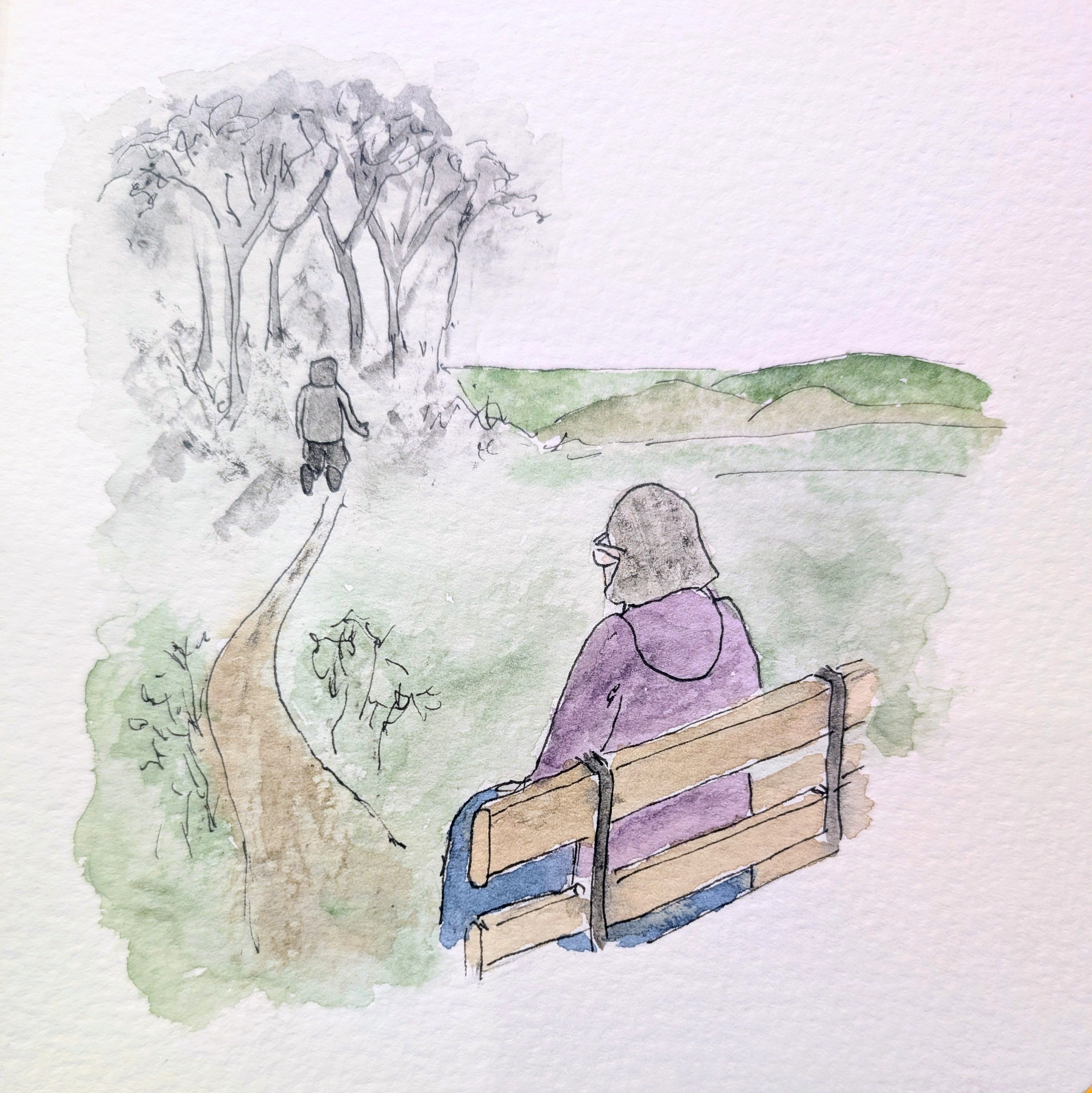
and more like becoming a compassionate witness to my own life.
Not rushing myself to forgive.
Not rushing myself to heal.
Not demanding immediate resolution.
But staying close enough to my own pain to say:
This mattered.
I matter.
And I won’t abandon myself here.
And perhaps it is from this place…
that shame begins to loosen.
Forgiveness becomes more truthful.
Self-care becomes more embodied.
and healing becomes less performative…
and more real.
I’d love to hear whether self-compassion has ever felt complicated or difficult for you, too, and whether grief, truth-telling, or lament have ever unexpectedly become part of what healing has looked like in your own life.
Thank you for reading.
Andrea x