

I recently treated myself to a new Google Pixel smartwatch.
My old smartwatch had died months ago, and in a brief and slightly noble phase, I decided I would return to a simpler life. Analog. Intuitive. Free from data.
Reader, I lasted longer than expected. But not all that long.
Because it turns out I quite like knowing things.
Especially things about how I’m doing.
So when the Pixel Watch arrived, I was quietly delighted. New tech, fresh start, little graphs and metrics to explore. I set it all up with the enthusiasm of someone who absolutely intends to use this information in a calm and balanced way.
And that’s when I noticed it tracked something called heart rate variability.
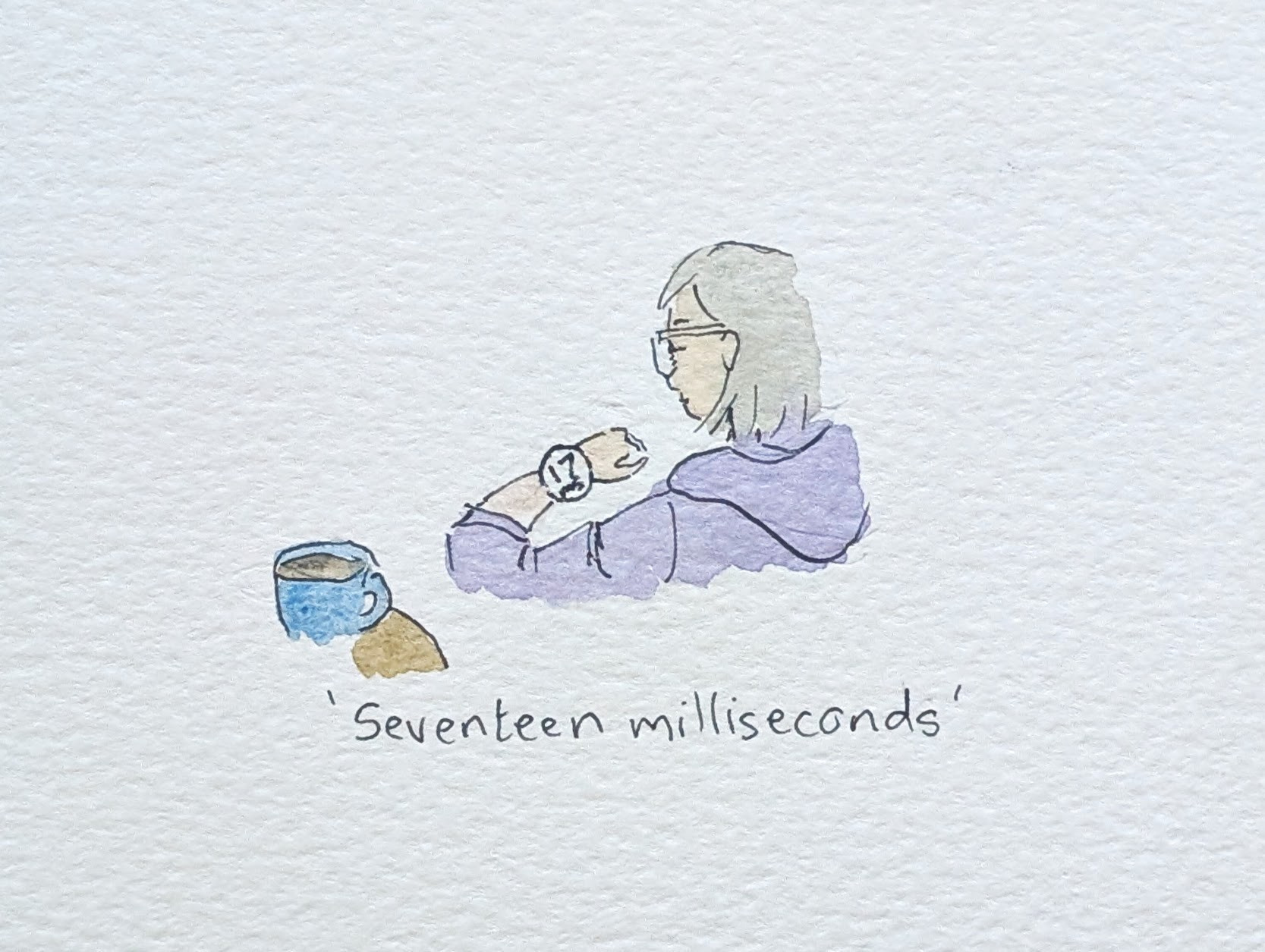
Seventeen
A few days in, I found the number.
17 milliseconds.
I didn’t really know what it meant, but instinctively, it didn’t feel like a winning score.
So, naturally, I did what I always do.
I looked it up.
The geeking out phase
Heart rate variability (HRV), it turns out, isn’t about how fast your heart beats.
It’s about the tiny differences in time between each beat.
And those tiny differences tell you something about your nervous system, how flexible it is, how well it’s adapting, how much capacity it has.
Higher HRV is generally associated with resilience and recovery.
Lower HRV…
Well.
Let’s just say 17 ms is not typically described as “thriving.”
The bit I wasn’t expecting
I think I expected to feel curious.
Maybe mildly concerned.
Possibly motivated.
What I didn’t expect was the quiet sort of sadness that came over me.
Because suddenly there it was, not in words, not in a journal entry, not in something I could explain away, but in a number on a watch face.
A small, precise way of my body saying:
This is how much I’ve been holding.
Naturally, I tried to fix it
Well, of course I did!
I downloaded breathing apps.
I sat upright.
I inhaled for four, exhaled for six like a woman on a mission.
I checked my HRV the next morning with the anticipation of someone awaiting exam results.
Seventeen.
Still seventeen.
That was just rude!
A slightly different understanding
As I read some more, something in me softened, maybe compassion emerged.
HRV is closely linked to the autonomic nervous system, particularly the balance between:
the sympathetic state (alert, mobilised, “on”)
and the parasympathetic state (rest, restore, regulate)
The vagus nerve plays a key role here, acting as a kind of communication pathway between the brain and the body.
When we feel safe, connected, and regulated, HRV tends to be higher.
When we’re under sustained stress, emotional, physical, or psychological, it often drops.
So then… context
When I looked at my numbers again, I realised:
Of course.
This isn’t random.
My body has been:
caring
holding
anticipating
managing
staying steady for others
For quite a long time.
And doing it well.
But at a cost.
So I’m trying something different
Not:
How do I raise my HRV as quickly as possible?
But:
What might help my nervous system feel a little safer today?
That looks like:
Sitting down with a cup of coffee and actually sitting
Stepping outside for a few minutes of daylight
Breathing slowly (without turning it into a performance)
Letting myself rest without earning it
Paying attention to what soothes, not just what “works”
And yes, maybe occasionally still checking the number.
But holding it more lightly.
A gentler conclusion
Because maybe the goal isn’t to optimise the data.
Maybe it’s to listen to what the data is quietly pointing towards.
Not:
Do better.
But:
Be cared for, too.
What might your body be quietly trying to tell you,
if you gave it a moment to be heard?
I’d love to know if you feel like sharing.