

This weekend, I was treated to a lovely day out in Liverpool.
It’s been a busy season, and I was more than ready for a break. We wandered around the city, enjoyed some good food, and headed to the theatre to watch The Karate Kid musical.
I was expecting a bit of nostalgia, a few laughs, some good music, and an enjoyable afternoon out.
What I wasn’t expecting was to find myself blinking back tears.
For those who don’t know the story, Daniel travels across the entire United States with his mum. His dad has died, and his mum has been offered a job and the chance of a fresh start. While she’s hopeful, Daniel is devastated.
Everything familiar has been left behind: his friends, his home, his sense of belonging. He doesn’t want a new beginning. He wants the life he has lost.
Near the beginning of the show, Daniel and his mum sing a song about writing a new story. His mum sings it with hope. Daniel sings it with anxiety. How can he possibly imagine a new story when he is still grieving the old one?
That song really moved me.
At the moment, I’m reading a book by Mary DeMuth called Restory Your Life. I’ve been fascinated by how she uses the language of story and narrative to explore healing from trauma. The idea that recovery might involve becoming an active participant in our own story again has stayed with me.
Mary is a novelist whose own story includes trauma, resilience, healing, and restoration. Through the book, she uses both story structure and biblical characters to help us explore our own lives.
One of the things I appreciate most is that she doesn’t suggest we erase our past or pretend difficult things never happened. Quite the opposite. She encourages us to tell the truth, to acknowledge our losses, to face our wounds, to grieve what needs grieving, and to be honest about what shaped us.
That resonates deeply with me because it echoes much of what I’ve been writing about recently.
Healing isn’t pretending everything is fine. It’s not about putting a positive spin on pain. It’s about being truthful.
But Mary also suggests something else. We might not get to choose everything that happens to us, but we do get some say in how we tell our story.
One chapter that particularly resonated with me explored what she calls the muddled middle. She draws on the story of a woman who suffered from bleeding for twelve long years before encountering Jesus.
Twelve years.
Not twelve weeks, not twelve days, but twelve years of uncertainty, disappointment, limitation, and waiting.
That chapter deeply resonated with me because much of life can feel like an extended muddled middle.
And perhaps that’s also why I found myself emotional in the theatre. I recognised something of myself in Daniel’s anxiety about starting a new chapter with the old one barely closed. Not because our stories are remotely similar, but because I know what it feels like to wish difficult chapters were distant memories.
I’m no longer in the depths of some of the trauma that I’ve experienced. Much healing has happened. Much growth has happened. But I am still living with some of the consequences. There are still difficult circumstances around me. There are still challenges that haven’t miraculously disappeared.
Sometimes I catch myself wanting a neat ending. The breakthrough moment. The final chapter where everything is resolved.
Instead, life often unfolds in long stretches of muddled middle. And I think that’s normal. It’s probably where many of us are living.
The muddled middle is not evidence that our story is stuck. It’s simply the place from which the next chapter will begin.
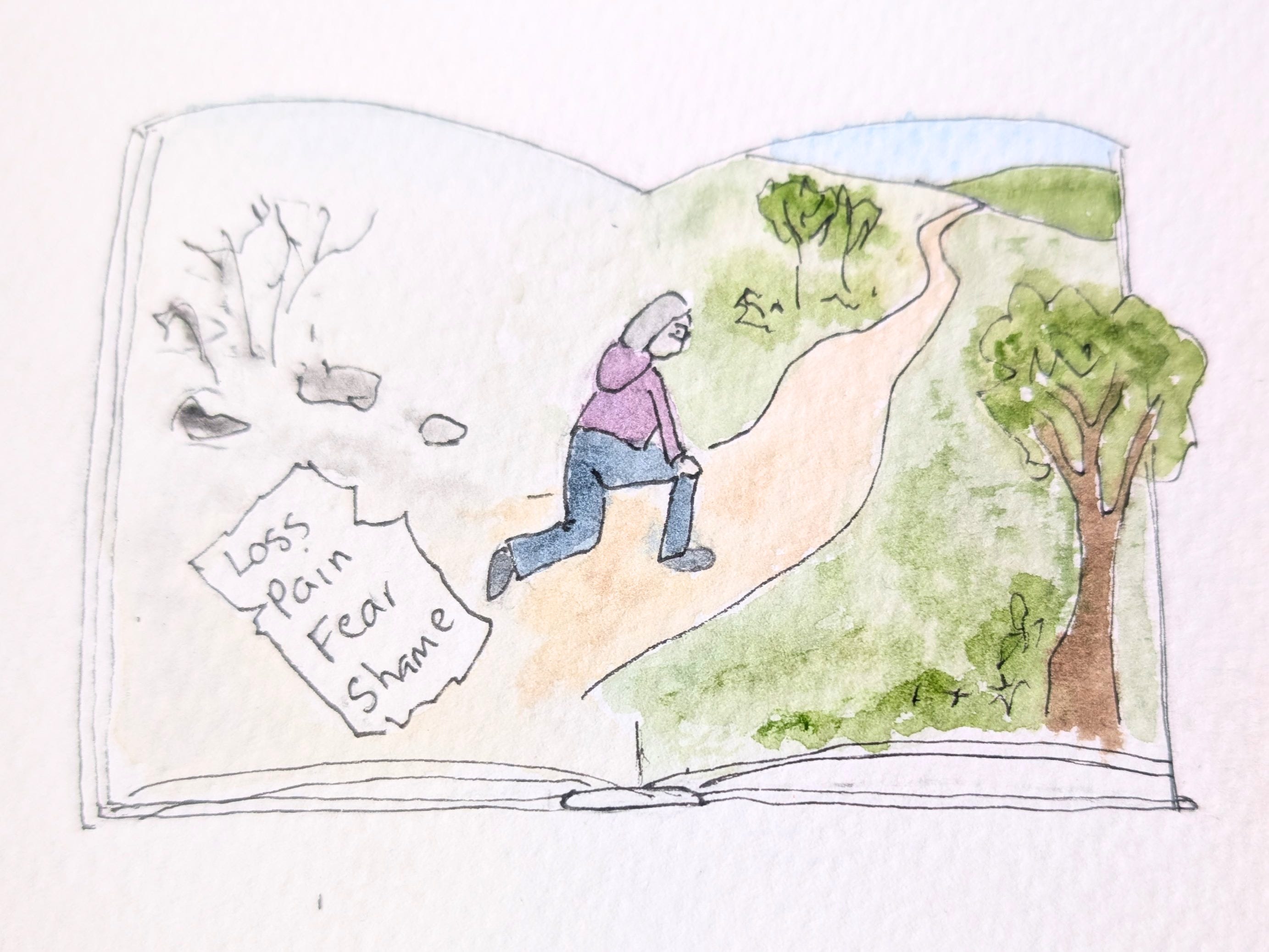
What I loved about Mary’s book is that she didn’t stay in the muddled middle.
She moves on and, in a final chapter, focuses on the Samaritan woman whom Jesus meets at the well.
Jesus engages with her in her brokenness. He knows her whole story. He doesn’t shame her or dismiss her. Instead, in that encounter, he changes her life.
But she doesn’t receive that hope just for herself. She goes and tells others.
The woman who arrived carrying shame becomes someone who brings hope.
The one who was helped becomes a helper.
The one who was restored becomes someone who points others to restoration.
That chapter was really special for me because it reflects so much of what I hope to be doing through this blog.
I don’t write because I have life figured out.
I don’t write because I have reached some wonderful place where all my wounds are healed and every problem has been solved.
I write because, along the way, I have found hope.
I have found people willing to walk alongside me.
I have found truth that has helped me make sense of my experiences.
I have found healing.
Not complete healing, not perfect healing, but real healing.
And if sharing my story helps someone else feel less alone, then it’s definitely worth the vulnerability.
Later in The Karate Kid musical, another line struck me.
Daniel says, “How can I be the hero in my story if I don’t even try?”
And I love that.
Not because it suggests we can control everything, but it reminds us that we are not merely passive observers in our own lives.
We can make choices.
We can seek help.
We can learn.
We can grow.
We can take the next step, even if it’s small.
No, Daniel doesn’t get his old life back. The story doesn’t erase his past losses.
But he does learn to step into a new chapter rather than spending his life wishing for a different one.
And perhaps that’s what restoring is all about.
Not denying the hard chapters.
Not pretending the painful parts never happened.
But choosing not to let those chapters have the final word.
As I look back over my own life, there are chapters that I definitely wouldn’t have chosen.
There are pages that are stained with tears, trauma, disappointment, confusion, and loss.
But I am increasingly convinced that those chapters will not define the ending.
We can tell the truth about what happened.
We can grieve.
We can heal.
We can choose our next steps.
We can become active participants in the story that’s still unfolding.
And we get to make our own final edits.
And maybe we can even help others do the same.
So let’s not give up in the muddled middle.
Let’s keep writing.
Let’s keep growing.
Let’s keep moving towards hope.
After all, the story isn’t over yet.